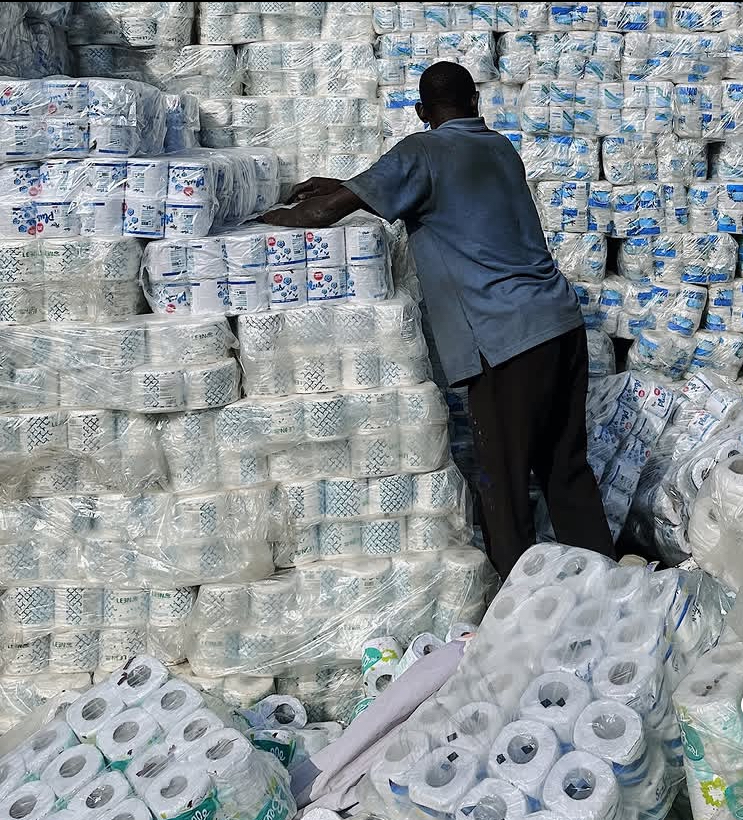
How to Start a Tissue Paper Business in Nigeria (2026 Guide)
The Complete Beginner-to-Expert Blueprint for Building a Profitable Tissue Brand in Nigeria
Written by Studydash Editorial Team
We focus on real-life Nigerian stories, motivational and inspirational struggles, business survival, and success journeys across Nigeria.
Introduction:
“What if the next business that changes your life is something Nigerians use every single day?”
In Nigeria today, millions of people wake up every morning worried about survival.
Some graduates roam the streets with certificates but no jobs.
Some parents struggle daily just to feed their children.
Some youths wake up with dreams but sleep with frustration.
The painful reality is this:
Nigeria’s economy has become tougher.
Food prices keep rising.
Fuel prices continue increasing.
Rent is becoming unbearable.
Yet despite all this hardship, one thing remains constant:
People still buy tissue paper every single day.
Think about it carefully.
Whether Nigeria is facing inflation, fuel scarcity, election tension, or economic crisis…
Tissue paper is still being used in:
- Homes
- Hotels
- Restaurants
- Churches
- Schools
- Hospitals
- Offices
- Event centers
- Supermarkets
That is why smart entrepreneurs are quietly building profitable businesses from tissue paper production and distribution.
While many people chase “big flashy businesses,” some Nigerians are making steady income from simple daily-consumption products.
And the surprising part?
Some started from one small room.
This guide will show you everything you need to know about starting a profitable tissue paper business in Nigeria in 2026 — even if you are starting from zero.
Why Tissue Paper Business Is Exploding in Nigeria
Nigeria’s population continues to grow rapidly.
With over 220 million people, demand for hygiene products keeps increasing yearly.
According to National Bureau of Statistics and Small and Medium Enterprises Development Agency of Nigeria, small businesses contribute massively to employment and economic activities across the country.
At the same time, hygiene awareness has increased significantly since the COVID-19 era.
Today, more Nigerians prioritize:
- Cleanliness
- Hygiene
- Sanitation
- Personal care
This has increased the demand for:
- Toilet tissue
- Facial tissue
- Napkins
- Kitchen towels
The market keeps expanding every year.
The Emotional Reality of Unemployment in Nigeria
“I had a certificate but no future.”
That was the painful reality for many Nigerian youths.
For years, society taught young people that success only comes through office jobs.
But after graduation, reality becomes brutal.
No connection.
No job.
No support.
Many young Nigerians become trapped in depression and frustration.
Some begin to lose confidence in themselves.
Some hide from friends because of shame.
Some survive by pretending life is okay on social media.
But one thing successful entrepreneurs eventually discover is this:
Problems create opportunities.
And tissue paper solves an everyday problem.
The Business Opportunity Hidden in Everyday Life
Most people ignore ordinary products because they look too simple.
But simple products often create powerful businesses.
Think about it:
How many homes stop buying tissue paper?
Almost none.
This is what makes the tissue paper business powerful:
- Repeat customers
- Daily demand
- Fast consumption
- Easy distribution
- Scalable market
Unlike luxury businesses that depend on trends, tissue paper remains a necessity.
That makes it more stable during difficult economic periods.
What Is Tissue Paper Business?
Tissue paper business involves:
- Producing tissue products
- Converting jumbo rolls into finished rolls
- Packaging tissues
- Branding products
- Distributing to customers
There are three major business models:
- Tissue Conversion Business
This is the most common beginner model.
You buy jumbo tissue rolls and convert them into smaller rolls using machines.
This is easier and cheaper for beginners.
- Tissue Distribution Business
You buy finished tissue products from manufacturers and supply retailers.
Less production stress.
Lower startup cost.
- Full Manufacturing Business
This involves producing tissue paper from raw pulp materials.
Requires heavy investment and industrial machinery.
Best for large-scale investors.
Types of Tissue Products You Can Produce
- Toilet Roll Tissue
The most common tissue product in Nigeria.
Used daily in homes and public places.
- Facial Tissue
Popular among offices, vehicles, salons, and middle-class consumers.
- Serviettes/Napkins
Common in restaurants, fast-food outlets, and events.
- Kitchen Towels
Growing fast among urban households.
- Industrial Tissue
Used in hotels, hospitals, and factories.
Nigeria’s Tissue Paper Market in 2026
Nigeria remains one of Africa’s biggest consumer markets.
Urbanization continues increasing rapidly.
More people now live in cities where tissue usage is higher.
Important market drivers include:
- Population growth
- Rising hygiene awareness
- Increase in hotels and eateries
- Expansion of schools and hospitals
- Growing supermarket chains
- Event industry growth
This means the tissue business still has huge opportunities for new entrepreneurs.
Why Tissue Paper Business Is Profitable
- Daily Consumption
People buy tissue regularly.
Customers return repeatedly.
- Wide Customer Base
Almost everyone uses tissue paper.
- Easy Distribution
You can supply:
- Shops
- Hotels
- Churches
- Restaurants
- Schools
- Hospitals
- Scalable Business Model
You can start small and expand gradually.
- High Repeat Purchase Rate
This is one major advantage.
People finish tissue quickly and buy again.
Who Can Start This Business?
This business is suitable for:
- Graduates
- Students
- Civil servants
- Traders
- Housewives
- Retirees
- Side hustlers
- Youth entrepreneurs
You do not need to be rich before starting.
What matters most is consistency and proper planning.
Step-by-Step Guide to Starting Tissue Paper Business
Step 1: Learn the Business Properly
Do not rush because of excitement.
Study:
- Production process
- Packaging
- Pricing
- Customer behavior
- Distribution system
Visit local tissue factories if possible.
Observe operations carefully.
Step 2: Conduct Market Research
Research your environment.
Ask:
- Which brands sell most?
- Why do customers prefer them?
- What packaging attracts buyers?
- What prices work best?
Good research prevents expensive mistakes.
Step 3: Register Your Business
Register with the Corporate Affairs Commission.
Benefits include:
- Business credibility
- Access to loans
- Bigger supply contracts
- Brand protection
Step 4: Choose a Strategic Location
Your location should have:
- Easy transportation access
- Stable security
- Enough ventilation
- Space for storage
You can start from:
- A mini shop
- Small warehouse
- Industrial area
Step 5: Buy Necessary Machines
Essential equipment includes:
Machine
Function
Rewinding Machine
Converts jumbo rolls
Band Saw Cutter
Cuts tissues evenly
Sealing Machine
Packages products
Embossing Machine
Adds texture/design
Generator
Power backup
Estimated Machine Prices in Nigeria (2026)
Equipment
Estimated Price
Rewinding Machine
₦500,000 – ₦2.5 million
Cutter Machine
₦150,000 – ₦700,000
Sealing Machine
₦50,000 – ₦250,000
Generator
₦300,000 – ₦2 million
Prices vary depending on quality and production capacity.
Step 6: Buy Raw Materials
Important raw materials include:
- Jumbo tissue rolls
- Nylon packaging
- Gum
- Cartons
- Labels
Major sourcing locations include:
- Lagos
- Onitsha
- Aba
- Kano
Step 7: Focus on Branding
This is where many businesses fail.
Your packaging affects perception.
Good branding creates trust.
Your brand should look:
- Clean
- Professional
- Attractive
- Hygienic
Step 8: Produce High Quality Tissue
Customers dislike tissues that:
- Tear easily
- Produce dust
- Feel rough
- Smell badly
Quality determines repeat customers.
Step 9: Build Strong Distribution
Many businesses fail because they focus only on production.
Production without distribution is dangerous.
Target:
- Supermarkets
- Provision stores
- Hotels
- Schools
- Restaurants
- Pharmacies
Step 10: Use Social Media Marketing
Promote your brand online.
Platforms include:
- TikTok
Post:
- Production videos
- Packaging photos
- Customer reviews
- Delivery updates
Factory Setup and Space Requirements
You do not need a massive factory initially.
A small setup can work effectively.
Ideal space requirements include:
- Production area
- Packaging section
- Storage room
- Small office space
Ensure proper ventilation and cleanliness.
Staff Structure for Small Tissue Business
Initially, you may need:
Position
Responsibility
Machine Operator
Production
Packaging Staff
Sealing/packing
Delivery Assistant
Logistics
Sales Rep
Customer acquisition
Small businesses can start with 2–4 workers.
Profit Breakdown (Realistic Analysis)
Example Small Setup
Monthly Expenses
Expense
Estimated Cost
Raw Materials
₦400,000
Fuel
₦100,000
Rent
₦60,000
Salary
₦100,000
Transportation
₦70,000
Total Expenses
≈ ₦730,000
Estimated Revenue
Depending on sales volume:
₦1.1 million – ₦2 million monthly
Estimated Monthly Profit
₦300,000 – ₦900,000 monthly
This depends heavily on:
- Market reach
- Distribution strength
- Product quality
- Operational efficiency
The Hidden Truth About Why Many Nigerians Remain Broke Despite Working Hard
One painful reality many Nigerians are beginning to understand is this:
Hard work alone is no longer enough.
There are people who wake up by 4 a.m. every morning, struggle under the sun all day, return home exhausted, yet remain financially stuck for years.
Why?
Because effort without ownership often leads to frustration.
For decades, many people depended completely on salaries and unstable jobs.
But Nigeria’s economic situation has changed dramatically.
Today, survival requires more than certificates.
It requires:
- Skills
- Strategy
- Multiple income streams
- Smart business decisions
This is why small manufacturing businesses are becoming more attractive across Nigeria.
Unlike businesses that depend only on trends or social media hype, manufacturing creates products people consume repeatedly.
And tissue paper falls perfectly into that category.
Every single day, millions of Nigerians use tissue paper without thinking twice about it.
People may reduce luxury spending during hard times…
But they rarely stop buying basic hygiene products.
This is what makes the tissue paper business powerful.
It solves an everyday problem.
Why Daily-Need Businesses Survive Economic Hardship Faster
During difficult economic periods, many businesses collapse because customers stop spending on non-essential products.
For example:
- Expensive fashion items
- Luxury gadgets
- Entertainment products
But daily-consumption products continue moving in the market.
Products like:
- Food
- Water
- Soap
- Tissue paper
remain in constant demand.
This is one major reason smart entrepreneurs are paying attention to practical businesses instead of chasing internet hype.
Many successful Nigerian business owners built wealth from businesses people once ignored.
Some started by supplying ordinary products to small shops.
Others focused on consistent distribution instead of looking rich online.
That is an important lesson many young entrepreneurs fail to understand.
Visibility is not the same as profitability.
Some businesses look flashy online but generate little income.
Meanwhile, simple businesses quietly generate steady cash flow every month.
The Psychology Behind Tissue Paper Sales in Nigeria
One interesting thing about Nigerian consumers is that emotions influence buying decisions heavily.
People naturally prefer products that appear:
- Clean
- Safe
- Soft
- Attractive
- Professional
This is why branding matters massively in tissue paper business.
Two tissues may have similar quality…
But customers often choose the better-packaged brand.
That means your success is not only about production.
It is also about perception.
Your packaging should communicate:
- Hygiene
- Trust
- Comfort
- Quality
Even small businesses can appear premium with proper branding.
Why Many Small Tissue Businesses Fail Within Two Years
This is the part many motivational business articles refuse to mention.
Not every tissue paper business succeeds.
Some fail painfully within months.
Why?
Because many people enter business emotionally without understanding operations.
Here are common reasons:
- Lack of Patience
Many beginners expect immediate profits.
But manufacturing businesses require gradual growth.
Customers need time to trust new brands.
- Poor Customer Service
Some business owners insult customers, delay deliveries, or behave carelessly.
In business, attitude affects profit.
- Inconsistent Product Quality
Today’s customers are smart.
Once quality drops, they quickly switch brands.
Consistency builds loyalty.
- Poor Financial Discipline
Some entrepreneurs begin spending business profits on unnecessary lifestyle expenses.
Instead of reinvesting, they prioritize appearances.
That destroys growth.
The Power of Small Beginnings
One dangerous mentality affecting many Nigerians today is the desire to “blow overnight.”
Social media has created unrealistic expectations.
People now believe success must look flashy immediately.
But real businesses often grow slowly.
Very slowly.
Many respected Nigerian companies today started from:
- Tiny shops
- Rented spaces
- Small machines
- Family support
Growth is usually gradual.
And that is okay.
A small start does not mean small destiny.
Sometimes the business that begins in one room eventually becomes a nationwide brand.
The important thing is consistency.
What Smart Entrepreneurs Understand About Business
Successful entrepreneurs understand one important truth:
Business is more about solving problems than showing off.
Tissue paper solves:
- Hygiene problems
- Comfort needs
- Daily convenience
That gives it long-term relevance.
The entrepreneurs who succeed most are usually those who:
- Focus on quality
- Build customer trust
- Stay consistent
- Control expenses
- Reinvest profits
Not necessarily the loudest people online.
How to Position Your Tissue Brand for Long-Term Success
If you truly want to stand out in Nigeria’s tissue market, focus on these five areas:
- Quality Consistency
Never reduce quality to save money.
Customers notice quickly.
- Attractive Packaging
Good packaging increases perceived value.
- Strong Distribution
Your product must be easy to find.
- Customer Relationships
Treat retailers respectfully.
Good relationships increase repeat orders.
- Smart Branding
People remember brands that feel trustworthy and professional.
The Emotional Truth Most People Avoid
Sometimes the difference between success and failure is not money.
It is mindset.
Many people give up too early because results are slow initially.
But every successful entrepreneur experiences difficult moments.
There will be:
- Frustration
- Delayed profits
- Customer complaints
- Financial pressure
- Fear
That is normal.
The key is persistence.
Because often, the people who eventually succeed are simply the ones who refused to quit too early.
Common Mistakes That Destroy Tissue Businesses
- Poor Product Quality
Customers quickly abandon low-quality brands.
- Bad Packaging
Cheap-looking products reduce trust.
- Lack of Marketing
Many people wrongly assume products will sell automatically.
- Overspending Too Early
Start modestly.
Grow gradually.
- Poor Financial Management
Separate business money from personal spending.
Real-Life Success Story
A woman in Aba reportedly started tissue production from a rented shop with only one machine.
She focused heavily on:
- Consistency
- Quality
- Customer relationships
Today, her products are supplied across multiple cities.
This proves growth is possible with discipline.
Challenges in the Business
- Power Supply Problems
Generators increase operating costs.
- Rising Fuel Prices
Transportation becomes expensive.
- Competition
Many brands exist already.
But branding and consistency still create market advantage.
Solutions to These Challenges
- Buy fuel-efficient generators
- Build strong customer loyalty
- Improve product quality
- Reduce waste during production
- Buy raw materials in bulk
How to Scale Into a Recognized Brand
To grow bigger:
- Reinvest profits
- Add more machines
- Expand distribution
- Improve branding
- Build online presence
- Register trademarks
Growth requires patience and consistency.
Future Opportunities in Nigeria’s Tissue Industry
The future remains promising.
Emerging opportunities include:
- Eco-friendly tissue production
- Luxury tissue products
- Hotel supply contracts
- Nationwide distribution
- Online wholesale delivery
Nigeria’s growing population means demand will likely keep increasing.
Expert Insight
Business analysts often describe daily-consumption products as “recession-resistant businesses.”
Why?
Because people continue buying them regardless of economic hardship.
Tissue paper belongs to this category.
That makes it one of the more stable small manufacturing businesses in Nigeria.
Internal Linking Strategy:
You can also read about:
- “How to Start Pure Water Business in Nigeria”
- “Most Profitable Businesses in Nigeria”
- “How to Register a Business in Nigeria”
- “Best Small Manufacturing Businesses”
- “How to Start Mini Importation
Frequently Asked Questions (FAQ) :
Is tissue paper business profitable in Nigeria?
Yes. Due to daily demand and repeat purchases, tissue paper business can generate stable income when managed properly.
How much can I start with?
Small-scale setups can start from ₦300,000 to ₦1.5 million depending on equipment and production scale.
Do I need a factory?
No. Many people start from small rented spaces.
Which state is best for tissue business?
Commercial states like Lagos, Anambra, Abia, Rivers, Kano, and Abuja offer strong market opportunities.
Can I start from home?
Yes, small-scale conversion businesses can start from home if there is enough space and proper ventilation.
Final Emotional Conclusion
“Some opportunities look ordinary until they change your life.”
Right now, somebody somewhere in Nigeria is making money from a product many people ignore daily.
That person is not necessarily more intelligent than you.
They simply took action.
The painful truth is this:
Many Nigerians die with dreams because fear stopped them from starting.
Fear of failure.
Fear of mockery.
Fear of uncertainty.
But every successful entrepreneur once started confused.
Every big company once started small.
The tissue paper business may not sound glamorous…
But glamour does not pay bills.
Results do.
Consistency does.
Courage does.
One machine can become a factory.
One customer can become a distribution network.
One decision can change your family story forever.
Do not wait for perfect conditions.
Start with what you have.
Your future may depend on the opportunity you stop ignoring today.
Disclaimer
This article is for educational and informational purposes only. Startup costs, profits, and market conditions may vary depending on inflation, location, economic conditions, operational strategy, and management efficiency. Readers are encouraged to conduct proper market research and seek professional business advice before investing.
About the Author :
Written by Studydash Editorial Team
We focus on real-life Nigerian stories, motivational and inspirational struggles, business opportunities, survival journeys, entrepreneurship, and success stories designed to educate, empower, and inspire Nigerians toward financial independence and sustainable growth.